

At the Last Supper, while the bread and Cup were still making their rounds, Jesus shocked his disciples by announcing that one of them was going to betray him. I can picture them putting their hand to their chests and pleading their innocence, “Is it I, Lord? while indignantly looking around the table and casting a suspicious eye at their fellow comrades. But while the taste of bread and wine was still fresh in their mouths, they quickly pivoted from identifying the backstabbing snitch to a more personal concern: Who among them was the greatest?
The other disciples were indignant, not because they thought the timing inappropriate, what with their Master about to go to the Cross and all, but probably because they hadn’t thought of it first and didn’t want the others to get the drop on them. Jesus responded by giving them a powerful kingdom truth on leadership: “The kings of the Gentiles exercise lordship over them…But not so with you. Rather, let the greatest among you become as the youngest, and the leader as one who serves.” You can just hear the air squeaking out of their ego-inflated heads, especially Peter’s. He had to assume he had the inside track, seeing how that no less than Jesus himself once publicly honored him as a rock-solid leader, not withstanding the fact that shortly afterwards Jesus called him Satan.
This was radical teaching, as those who ruled in those days were usually ruthless tyrants. The only thing they were familiar with serving was serving up someone’s severed head on a platter. But as in everything else in Christ’s kingdom, practicing godly, righteous leadership, to use Dallas Willard’s illustration, would be like trying to fly an airplane right side up in an upside-down world.
As a former pastor of some twenty-five years, I’ve witnessed the fact that most people can’t handle being promoted. And for many years, that also included me. It changes people, and too often not in a good way. Like few things in life, promotion reveals what’s inside a man. The newly promoted Bible study leader or newly minted assistant pastor can suddenly take on an aura of superiority and expect others to acknowledge their newfound status, and they can even become indignant when they don’t. This new leader can begin to see himself as smarter and above the rest of the herd. Why? Because he’s suddenly wiser and smarter? No, but because his position convinces him that he is. And as long as he sees himself in such an amplified light, his pride limits his future usefulness and retards any further personal maturity. He has become his position; this is now his identity, and rare is the person who can avoid this trap.
In such cases, with all the drama of their elevated status, the purpose for such a promotion is lost, which is, as Paul put it, “To equip the saints for the work of the ministry, for building up the body of Christ.” He said nothing about leadership embellishing one’s personal reputation or shoring up one’s self-esteem. Nor did he mention anything about gratifying one’s need for affirmation or cementing one’s personal legacy.
I came to Christ out of the 1970s “Jesus people movement,” and appropriately, I wasn’t converted in a church service or in a massive evangelistic crusade. I didn’t even recite the Roman Road to salvation prayer, but like the Apostle Paul, I met Christ one-on-one on a desert road. I wasn’t walking on my way to Damascus, but rather, I was hitchhiking on my way to Tucson. Nor did I see a blinding light or hear a booming Voice from heaven, knocking me to the ground. However, under the scorching, bright Arizona sun, I was staggered back a few steps by a sharp pain that hit me in the chest. And though I was only twenty-seven years old, the thought that I could die out there scared me enough to consider my eternal destiny. I was no Bible scholar, but my Catholic upbringing taught me about heaven and hell, and in my current spiritual state, I determined that I would probably be going to the latter.
Alarmed by the prospect of fire and brimstone, I walked off the road, dropped my hundred-pound backpack, and fell to my knees under a scrubby mesquite tree. I lifted my hands to heaven, and not being in the habit of praying, I simply called out to God and began repenting of everything I could think of, including my childhood involvement in burning down a neighbor’s garage. (To our relief, the adults blamed the fire on “spontaneous combustion,” which my playmates and I quickly agreed to). When I was finished confessing, I felt different, lighter. I knew something had happened, but to make sure this was God, I challenged him to prove it by having the next car that went by stop and give me a ride. It was a valid test, because for the last few hours, there had been very few cars, and none apparently wanted to pick up someone who looked like the front cover of a Jethro Tull album.
I stood up, and as I strapped on my backpack and turned back to the road, I saw a psychedelic, flower-powered Volkswagen van. In the searing, desert heat, the kind that causes a mirage of simmering air to appear just above the surface, I thought the van might be a drug-induced hallucination, because it wasn’t coming down the road normally, but it was backing towards me in reverse. As I continued peering through the wavering air at the slowly backing van, I saw the side door slide open and a bearded man wildly gesturing for me to get in. Sitting in the back beside a washtub full of iced beers, the driver turned around and said to me, “We passed you by about five minutes ago, but something told me to go back and get you.”
A few weeks later, God led me to a church full of young people just like myself, not one of those old, stuffy, religious places where any sign of life had long since been suffocated out of it. In those rustic, early days, the young pastors preferred being called “brothers.” Most of us new believers traded our pot highs for Jesus highs, Gospel rock bands played evangelistic concerts on Friday and Saturday nights, and I preached my first altar call barefoot. We were tongue-talking, wide-eyed, Jesus freaks, and anyone outside the church building was an eligible target for conversion. Sermons were served up three times a week, and we eagerly tithed from our minimum wage jobs. Sunday mornings quickly filled up with “Jesus people” weddings, honeymoons were celebrated at Bible conferences, and babies began filling up the nurseries.
But over time, those innocent days slowly hardened into a more structured organization, where “brothers” now insisted on being called “pastors,” and anyone who didn’t make that smooth transition was eyed suspiciously. The preachers began developing a unique ability to turn any text in the Bible into a three-point scolding message on why we weren’t good enough, that we “hadn’t arrived,” and if we just did more good works for the church and answered a few more altar calls, God might finally be happy with us. Or, to paraphrase John Burke, “You’re bad, God is mad, try harder.”
Pastors began lording it over the congregants, and terms like “headship” became the most prominent doctrine. The lines became increasingly blurred between being led by the Holy Spirit and pastoral submission, and to disagree with a pastor was to disagree with God, enabling pastors to subtly displace the position that Christ was supposed to have in our hearts to the point of making them objects of idolatry. Once, I was called out in a public assembly and given a “prophetic message” that I had a “wandering spirit” and reprimanded with the words, “You think it’s just about you and Jesus” (I thought that was the goal), which meant that the pastor felt I wasn’t sufficiently under his control.
Years later, when my family and I were almost murdered in an armed home invasion in Johannesburg, South Africa, it was strongly inferred by a pastor that we were at least partially responsible because we weren’t sufficiently submitted to our headship. On another occasion, my teenage daughter was grabbed by the arm, spun around, and rebuked by a pastor for not attending a prayer meeting. And worse, of the thirty-some witnesses twenty feet away, no one “saw a thing.” It had become that kind of place.
One popular phrase used to keep the flock in line was, “God has an address,” which meant that if you wanted to hear from God and maintain your salvation, you needed to stay in the church body that “God planted you in.” If you chose to uproot yourself for another church, you were warned that you’d probably end up divorced, lose your salvation, your mind, and forever be employed as a Walmart greeter or flipping burgers at McDonald’s. “Would you like that with fries?” was one of the thinly veiled threats about what would happen to you if you left that group. When I returned to America with my family after being missionaries in South Africa for eight years, we wanted to come back into the international headquarters church rather than our sending church. This was such a major transgression to them that I was banned from ministry for a full year, publicly humiliated along with my family, including my wife and three daughters, who helped build up our South African tent church, and overnight, I was reduced from being an African missionary to working as a bread and ice cream vendor. At least I avoided Walmart and McDonald’s.
Another control tactic they employed was a technique called “keystroke logging” or “keyboard capturing.” This was a creepy method of spying on you by candidly downloading a program into your computer that enabled them to monitor everything you typed on your keyboard, including reading all your emails in real time as you were writing them. If this technique of unauthorized surveillance were employed in the secular workforce, there would be lawsuits, but this type of invasion of privacy was deemed warranted to keep people in line.
What began as a grass-roots, spontaneous move of God eventually morphed into a well-ordered system of heavy shepherding, where pastors began acting more like Old Testament kings than New Testament shepherds. Most had lost sight of the purpose that God had elevated them to church leadership in the first place: “To equip and build up the body of Christ.” Instead of feeding the flock, these types of leaders feasted on them to bolster their need for significance and undergird their insecurities by controlling others. Instead of them modeling the attitude of John the Baptist: “He must increase, and I must decrease,” the opposite began prevailing, where Jesus was decreased and the pastor’s influence increased in their narcissistic compulsion to dominate. These control issues wouldn’t allow those under them to grow beyond their leaders, like raising a child but never allowing them to grow past their sixteenth birthday, because if they did, the pastors might lose their influence over them, and they would become more dependent on Jesus than them.
.
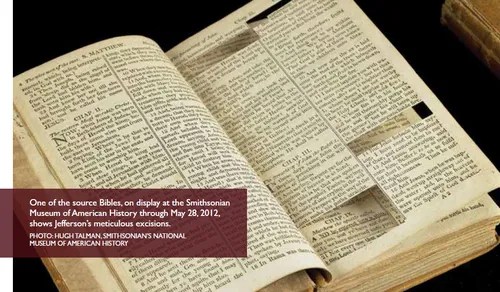
It was a similar experience in my youth as a Catholic, before I became a biblical Christian. I remember our priest telling us that we shouldn’t read the Bible on our own, because without the priest to interpret it for us, we couldn’t understand it. The priest must have known that if people began reading the Bible for themselves, they would become less dependent on Catholicism and more on the Bible. And they would have been right.
God’s Word is meant to be a direct lifeline from God to the believer. It doesn’t need to be filtered through any man’s personal agenda or tailored to conform to some denominational interpretation. It is inspired by the Holy Spirit, not by man, and as Paul insisted, “Above all, you must understand that no prophecy of Scripture comes from one’s own interpretation,” and woe to anyone who has the pride to think that somehow they’re the exception. It’s the divine manna from heaven, not to be added to or subtracted from, flowing directly from the heart of God to feed, nourish, and build up the saints in Christ. Since the Holy Spirit is the Author of the Word, He is also the Illuminator of the Word. Only pride and an elevated sense of self-importance would make any man believe he could do it better. John wrote, “But you have received the Holy Spirit, and He lives within you, so you don’t need anyone to teach you what is true. For the Spirit teaches you everything you need to know.” Thank God for the many preachers who simply preach the Word and let the Holy Spirit do its work, rather than twisting it to fit their own particular agenda.
The Apostle Paul wrote, “desire the pure milk of the Word,” the unadulterated Word of God. We don’t need a mediator. “We have one mediator between God and men, that is, the man Christ Jesus.” No priest, no pastor, no elder, no bishop or pope has the right to get in between God’s Word and the believer and put their own personal spin on it. When believers hear the Word of God preached, they should be Bereans and not just assume everything they hear is the gospel truth. Once, I heard preached from the pulpit that Samson had gone to hell because he committed suicide. Wow, who would have thought that one of the “Heroes of Faith” had gone to hell? Okay, that’s an easy one, but it’s not healthy to just sit there like an undiscerning SpongeBob and not respectfully challenge things we believe are unbiblical. The Apostle John wrote, “Beloved, do not believe every spirit, but test the spirits whether they are of God; because many false prophets have gone out into the world.”
Paul warned against those who “preach with selfish ambition.” He could have ruled with an iron fist. He could have made it all about himself, proudly listing his credentials and demanding allegiance. Instead, he said he would rather perish himself than see his fellow Jews be lost. He wrote, “I pray that from his glorious, unlimited resources, he will empower you with inner strength through his Spirit. Then Christ will make his home in your hearts as you trust in him. Your roots will grow down into God’s love and keep you strong. And may you have the power to understand, as all God’s people should, how wide, how long, how high, and how deep his love is. May you experience the love of Christ, though it is too great to understand fully. Then you will be made complete with all the fullness of life that comes from God.” (Ephesians 3:16-19).
Any sermon preached on the above text, especially considering its uplifting theme, would not have conformed with my former group’s unique perspective, and thus would have violated what they called the “fellowship pattern,” which meant every sermon needed to align with their peculiar exegesis. And though my former church organization was extremely evangelistic and believed in all the gifts of the Spirit, they were sorely lacking in the fruits of the Spirit, especially humility and love. In the three decades I spent with them, I don’t remember hearing a single sermon on the love and grace of God or an encouraging sermon on who we were in Christ. It wasn’t that kind of place. Jesus said, “A disciple is not above his teacher, but everyone who is fully trained will be like his teacher.” Jesus had a “meek and humble heart,” which is to say that those trained by Him would have the same qualities. Unfortunately, disciples in the above group became as proud as their pastors who trained them.
This is what Ezekiel warned about in chapter 34: “Woe to the shepherds who have become feeders of themselves and not their flocks.” These kinds of shepherds feast on the flock for the purpose of gratifying their own appetite for self-importance and to shore up their own personal insecurities. Ezekiel said these shepherds eat the finest food while the flock starves for spiritual nourishment that would build them up and encourage them. He chastised those shepherds for “ruling them with force and harshness.” Jude added, “These are…shepherds feeding themselves…they promise people refreshment and truth, but leave them spiritually dry.” They keep their people feeling condemned and dependent on them, while addicting them to keep returning for more of the same in hopes of finally feeling accepted.
Jesus is the role model for spiritual leadership. If anyone could have lorded it over His followers, it was Him. But instead, He washed their feet. He could have demanded His rights as the Son of God, but instead He went to the cross. Jesus put Himself in a lower position than those who would follow Him. He once compared his leadership to a mother hen gathering his chicks to himself to shelter and nurture them, and it was said of Him that “a bruised reed he would not break.” He asked, “Who was greater, the one who reclines at the table or one who serves? But I came as one who serves,” placing his disciples in the position of those who recline at the table. That Jesus Himself would place Himself in the position of a servant says that any spiritual leader should do the same, unless they feel they are greater than Jesus. Peter wrote, “Shepherd the flock of God that is among you, exercising oversight…not domineering over those in your charge for personal gain.” In other words, not lording over them for the sake of one’s personal self-aggrandizement.
All this to say that though I may not know everything there is to know about healthy church leadership, I do know what isn’t.



 Changing from glory to glory