FEASTING ON THE FLOCK

At the Last Supper, while the bread and Cup were still making their rounds, Jesus shocked his disciples by announcing that one of them was going to betray him. I can picture them putting their hand to their chests and pleading their innocence, “Is it I, Lord? while indignantly looking around the table and casting a suspicious eye at their fellow comrades. But while the taste of bread and wine was still fresh in their mouths, they quickly pivoted from identifying the backstabbing snitch to a more personal concern: Who among them was the greatest?

The other disciples were indignant, not because they thought the timing inappropriate, what with their Master about to go to the Cross and all, but probably because they hadn’t thought of it first and didn’t want the others to get the drop on them. Jesus responded by giving them a powerful kingdom truth on leadership: “The kings of the Gentiles exercise lordship over them…But not so with you. Rather, let the greatest among you become as the youngest, and the leader as one who serves.” You can just hear the air squeaking out of their ego-inflated heads, especially Peter’s. He had to assume he had the inside track, seeing how that no less than Jesus himself once publicly honored him as a rock-solid leader, not withstanding the fact that shortly afterwards Jesus called him Satan.

This was radical teaching, as those who ruled in those days were usually ruthless tyrants. The only thing they were familiar with serving was serving up someone’s severed head on a platter. But as in everything else in Christ’s kingdom, practicing godly, righteous leadership, to use Dallas Willard’s illustration, would be like trying to fly an airplane right side up in an upside-down world.

As a former pastor of some twenty-five years, I’ve witnessed the fact that most people can’t handle being promoted. And for many years, that also included me. It changes people, and too often not in a good way. Like few things in life, promotion reveals what’s inside a man. The newly promoted Bible study leader or newly minted assistant pastor can suddenly take on an aura of superiority and expect others to acknowledge their newfound status, and they can even become indignant when they don’t. This new leader can begin to see himself as smarter and above the rest of the herd. Why? Because he’s suddenly wiser and smarter? No, but because his position convinces him that he is. And as long as he sees himself in such an amplified light, his pride limits his future usefulness and retards any further personal maturity. He has become his position; this is now his identity, and rare is the person who can avoid this trap.

In such cases, with all the drama of their elevated status, the purpose for such a promotion is lost, which is, as Paul put it, “To equip the saints for the work of the ministry, for building up the body of Christ.” He said nothing about leadership embellishing one’s personal reputation or shoring up one’s self-esteem. Nor did he mention anything about gratifying one’s need for affirmation or cementing one’s personal legacy.

I came to Christ out of the 1970s “Jesus people movement,” and appropriately, I wasn’t converted in a church service or in a massive evangelistic crusade. I didn’t even recite the Roman Road to salvation prayer, but like the Apostle Paul, I met Christ one-on-one on a desert road. I wasn’t walking on my way to Damascus, but rather, I was hitchhiking on my way to Tucson. Nor did I see a blinding light or hear a booming Voice from heaven, knocking me to the ground. However, under the scorching, bright Arizona sun, I was staggered back a few steps by a sharp pain that hit me in the chest. And though I was only twenty-seven years old, the thought that I could die out there scared me enough to consider my eternal destiny. I was no Bible scholar, but my Catholic upbringing taught me about heaven and hell, and in my current spiritual state, I determined that I would probably be going to the latter.

Alarmed by the prospect of fire and brimstone, I walked off the road, dropped my hundred-pound backpack, and fell to my knees under a scrubby mesquite tree. I lifted my hands to heaven, and not being in the habit of praying, I simply called out to God and began repenting of everything I could think of, including my childhood involvement in burning down a neighbor’s garage. (To our relief, the adults blamed the fire on “spontaneous combustion,” which my playmates and I quickly agreed to). When I was finished confessing, I felt different, lighter. I knew something had happened, but to make sure this was God, I challenged him to prove it by having the next car that went by stop and give me a ride. It was a valid test, because for the last few hours, there had been very few cars, and none apparently wanted to pick up someone who looked like the front cover of a Jethro Tull album.

I stood up, and as I strapped on my backpack and turned back to the road, I saw a psychedelic, flower-powered Volkswagen van. In the searing, desert heat, the kind that causes a mirage of simmering air to appear just above the surface, I thought the van might be a drug-induced hallucination, because it wasn’t coming down the road normally, but it was backing towards me in reverse. As I continued peering through the wavering air at the slowly backing van, I saw the side door slide open and a bearded man wildly gesturing for me to get in. Sitting in the back beside a washtub full of iced beers, the driver turned around and said to me, “We passed you by about five minutes ago, but something told me to go back and get you.”

A few weeks later, God led me to a church full of young people just like myself, not one of those old, stuffy, religious places where any sign of life had long since been suffocated out of it. In those rustic, early days, the young pastors preferred being called “brothers.” Most of us new believers traded our pot highs for Jesus highs, Gospel rock bands played evangelistic concerts on Friday and Saturday nights, and I preached my first altar call barefoot. We were tongue-talking, wide-eyed, Jesus freaks, and anyone outside the church building was an eligible target for conversion. Sermons were served up three times a week, and we eagerly tithed from our minimum wage jobs. Sunday mornings quickly filled up with “Jesus people” weddings, honeymoons were celebrated at Bible conferences, and babies began filling up the nurseries.

But over time, those innocent days slowly hardened into a more structured organization, where “brothers” now insisted on being called “pastors,” and anyone who didn’t make that smooth transition was eyed suspiciously. The preachers began developing a unique ability to turn any text in the Bible into a three-point scolding message on why we weren’t good enough, that we “hadn’t arrived,” and if we just did more good works for the church and answered a few more altar calls, God might finally be happy with us. Or, to paraphrase John Burke, “You’re bad, God is mad, try harder.”

Pastors began lording it over the congregants, and terms like “headship” became the most prominent doctrine. The lines became increasingly blurred between being led by the Holy Spirit and pastoral submission, and to disagree with a pastor was to disagree with God, enabling pastors to subtly displace the position that Christ was supposed to have in our hearts to the point of making them objects of idolatry. Once, I was called out in a public assembly and given a “prophetic message” that I had a “wandering spirit” and reprimanded with the words, “You think it’s just about you and Jesus” (I thought that was the goal), which meant that the pastor felt I wasn’t sufficiently under his control.

Years later, when my family and I were almost murdered in an armed home invasion in Johannesburg, South Africa, it was strongly inferred by a pastor that we were at least partially responsible because we weren’t sufficiently submitted to our headship. On another occasion, my teenage daughter was grabbed by the arm, spun around, and rebuked by a pastor for not attending a prayer meeting. And worse, of the thirty-some witnesses twenty feet away, no one “saw a thing.” It had become that kind of place.

One popular phrase used to keep the flock in line was, “God has an address,” which meant that if you wanted to hear from God and maintain your salvation, you needed to stay in the church body that “God planted you in.” If you chose to uproot yourself for another church, you were warned that you’d probably end up divorced, lose your salvation, your mind, and forever be employed as a Walmart greeter or flipping burgers at McDonald’s. “Would you like that with fries?” was one of the thinly veiled threats about what would happen to you if you left that group. When I returned to America with my family after being missionaries in South Africa for eight years, we wanted to come back into the international headquarters church rather than our sending church. This was such a major transgression to them that I was banned from ministry for a full year, publicly humiliated along with my family, including my wife and three daughters, who helped build up our South African tent church, and overnight, I was reduced from being an African missionary to working as a bread and ice cream vendor. At least I avoided Walmart and McDonald’s.

Another control tactic they employed was a technique called “keystroke logging” or “keyboard capturing.” This was a creepy method of spying on you by candidly downloading a program into your computer that enabled them to monitor everything you typed on your keyboard, including reading all your emails in real time as you were writing them. If this technique of unauthorized surveillance were employed in the secular workforce, there would be lawsuits, but this type of invasion of privacy was deemed warranted to keep people in line.

What began as a grass-roots, spontaneous move of God eventually morphed into a well-ordered system of heavy shepherding, where pastors began acting more like Old Testament kings than New Testament shepherds. Most had lost sight of the purpose that God had elevated them to church leadership in the first place: “To equip and build up the body of Christ.” Instead of feeding the flock, these types of leaders feasted on them to bolster their need for significance and undergird their insecurities by controlling others. Instead of them modeling the attitude of John the Baptist: “He must increase, and I must decrease,” the opposite began prevailing, where Jesus was decreased and the pastor’s influence increased in their narcissistic compulsion to dominate. These control issues wouldn’t allow those under them to grow beyond their leaders, like raising a child but never allowing them to grow past their sixteenth birthday, because if they did, the pastors might lose their influence over them, and they would become more dependent on Jesus than them.

.

It was a similar experience in my youth as a Catholic, before I became a biblical Christian. I remember our priest telling us that we shouldn’t read the Bible on our own, because without the priest to interpret it for us, we couldn’t understand it. The priest must have known that if people began reading the Bible for themselves, they would become less dependent on Catholicism and more on the Bible. And they would have been right.

God’s Word is meant to be a direct lifeline from God to the believer. It doesn’t need to be filtered through any man’s personal agenda or tailored to conform to some denominational interpretation. It is inspired by the Holy Spirit, not by man, and as Paul insisted, “Above all, you must understand that no prophecy of Scripture comes from one’s own interpretation,” and woe to anyone who has the pride to think that somehow they’re the exception. It’s the divine manna from heaven, not to be added to or subtracted from, flowing directly from the heart of God to feed, nourish, and build up the saints in Christ. Since the Holy Spirit is the Author of the Word, He is also the Illuminator of the Word. Only pride and an elevated sense of self-importance would make any man believe he could do it better. John wrote, “But you have received the Holy Spirit, and He lives within you, so you don’t need anyone to teach you what is true. For the Spirit teaches you everything you need to know.” Thank God for the many preachers who simply preach the Word and let the Holy Spirit do its work, rather than twisting it to fit their own particular agenda.

The Apostle Paul wrote, “desire the pure milk of the Word,” the unadulterated Word of God. We don’t need a mediator. “We have one mediator between God and men, that is, the man Christ Jesus.” No priest, no pastor, no elder, no bishop or pope has the right to get in between God’s Word and the believer and put their own personal spin on it. When believers hear the Word of God preached, they should be Bereans and not just assume everything they hear is the gospel truth. Once, I heard preached from the pulpit that Samson had gone to hell because he committed suicide. Wow, who would have thought that one of the “Heroes of Faith” had gone to hell? Okay, that’s an easy one, but it’s not healthy to just sit there like an undiscerning SpongeBob and not respectfully challenge things we believe are unbiblical. The Apostle John wrote, “Beloved, do not believe every spirit, but test the spirits whether they are of God; because many false prophets have gone out into the world.”

Paul warned against those who “preach with selfish ambition.” He could have ruled with an iron fist. He could have made it all about himself, proudly listing his credentials and demanding allegiance. Instead, he said he would rather perish himself than see his fellow Jews be lost. He wrote, “I pray that from his glorious, unlimited resources, he will empower you with inner strength through his Spirit. Then Christ will make his home in your hearts as you trust in him. Your roots will grow down into God’s love and keep you strong. And may you have the power to understand, as all God’s people should, how wide, how long, how high, and how deep his love is. May you experience the love of Christ, though it is too great to understand fully. Then you will be made complete with all the fullness of life that comes from God.” (Ephesians 3:16-19).

Any sermon preached on the above text, especially considering its uplifting theme, would not have conformed with my former group’s unique perspective, and thus would have violated what they called the “fellowship pattern,” which meant every sermon needed to align with their peculiar exegesis. And though my former church organization was extremely evangelistic and believed in all the gifts of the Spirit, they were sorely lacking in the fruits of the Spirit, especially humility and love. In the three decades I spent with them, I don’t remember hearing a single sermon on the love and grace of God or an encouraging sermon on who we were in Christ. It wasn’t that kind of place. Jesus said, “A disciple is not above his teacher, but everyone who is fully trained will be like his teacher.” Jesus had a “meek and humble heart,” which is to say that those trained by Him would have the same qualities. Unfortunately, disciples in the above group became as proud as their pastors who trained them.

This is what Ezekiel warned about in chapter 34: “Woe to the shepherds who have become feeders of themselves and not their flocks.” These kinds of shepherds feast on the flock for the purpose of gratifying their own appetite for self-importance and to shore up their own personal insecurities. Ezekiel said these shepherds eat the finest food while the flock starves for spiritual nourishment that would build them up and encourage them. He chastised those shepherds for “ruling them with force and harshness.” Jude added, “These are…shepherds feeding themselves…they promise people refreshment and truth, but leave them spiritually dry.” They keep their people feeling condemned and dependent on them, while addicting them to keep returning for more of the same in hopes of finally feeling accepted.

Jesus is the role model for spiritual leadership. If anyone could have lorded it over His followers, it was Him. But instead, He washed their feet. He could have demanded His rights as the Son of God, but instead He went to the cross. Jesus put Himself in a lower position than those who would follow Him. He once compared his leadership to a mother hen gathering his chicks to himself to shelter and nurture them, and it was said of Him that “a bruised reed he would not break.” He asked, “Who was greater, the one who reclines at the table or one who serves? But I came as one who serves,” placing his disciples in the position of those who recline at the table. That Jesus Himself would place Himself in the position of a servant says that any spiritual leader should do the same, unless they feel they are greater than Jesus. Peter wrote, “Shepherd the flock of God that is among you, exercising oversight…not domineering over those in your charge for personal gain.” In other words, not lording over them for the sake of one’s personal self-aggrandizement.

All this to say that though I may not know everything there is to know about healthy church leadership, I do know what isn’t.

THE POPE

No blog on Catholicism would be complete without a critique of the pope. And what better time than after one who just passed away? I mean, if I’m going to take flack for my views on Catholicism, why not make it count? I wasn’t planning on this topic, but when a Christian radio presenter recently asked the goofy question, “What can we learn from Lent?” as if he was having a theological discussion with C.S. Lewis, and now with Pope Francis’s death and all the world’s attention focused on it as if Christ Himself has been re-crucified, as a former Catholic and now as a born again Christian, I feel compelled to state my case.

Among die-hard Catholics, I’ve heard it often repeated as if reciting a holy mantra, “I was born a Catholic and I’ll die a Catholic.” I’ve also heard it said that the Catholic Church has changed since I was a young alter boy in the early 1960s while attending Our Lady of Victory Catholic School. But if they’re the “one true church,” as they claim, then why do they feel the need to keep changing? Back in those days, it was open heresy to recite the Mass in anything other than Christ’s original language, which everyone knows was Latin, right? But there has been other more serious changes as well, like shifting to more of a “social justice” and an “environmental justice” gospel and advocating for open borders. On this latter issue, note the Vatican has some of the most serious walls on the planet, and anyone who would dare to intrude would be swiftly dealt with.

Throughout the years, the “Mother Church” has changed its views on other issues as well. One of their more bizarre changes came in reference to Limbo, like purgatory, another fictional place between heaven and hell where one is sent who isn’t good enough for heaven but not bad enough for hell. They used to teach that Limbo was a place where unbaptized babies go when they died, sort of like an infant purgatory. Now, they believe these babies no longer go to Limbo but are allowed to go straight to heaven, although even so they aren’t allowed to have full communion with God, so I’m supposing it’s like being confined to heaven’s nursery with no toys to play with. But all these changes create an insurmountable problem for them: if Catholics believe the pope to be infallible, which they still do, then how can one pope declare certain theologies and practices to be true, and then another come along later and declare something different? You can’t have it both ways.

The central credibility of Catholicism hinges on the office of the pope. According to their theology, the current pope comprises an unbroken succession going all the way back to the Apostle Peter. But the glaring problem with that is that Peter wasn’t a pope. Just because he outran John to the Lord’s tomb on Resurrection Sunday doesn’t make it so. And neither was Linus the second pope. Even Charlie Brown could tell you that. In fact, scholars such as Francis A. Sullivan claim that the Church of Rome was led by a college of presbyters rather than by a single man for at least the first three centuries. If we had to make a case for a leader of the 1st-century church, it would either be the Apostle Paul, who wrote two-thirds of the New Testament, or James, who was the leader of the Church at Jerusalem.

The supposed unblemished papal succession had a few other holes in it as well. For instance, there was a time when two popes reigned at the same time, and so the “Holy See” had dueling popes. And once there was even a woman who cross-dressed as a man, and so there was a female pope, Pope Joan. So, you see the problem with that.

The claim that Peter was the first pope originated from a misinterpretation of a teaching Jesus had with His disciples in Mathew 16. Jesus asked them who they believe He was. Peter responded, “You are the Christ, the living God.” Jesus commended Peter for his response, saying “flesh and blood has not revealed this to you but my Father in heaven.” Then, he continued, “You are Peter, and upon this rock I will build my church.”

Catholics use this Scripture to teach that Jesus was building His church on Peter, a mere man. If so, then we’d have to believe that the Father’s plan for mankind’s redemption was to send his only Son to this earth, and after He was rejected by the same people He came to save, and then after being tortured and killed in the most gruesome possible way imaginable, and then after rising from the dead He left the entire future of His Church on the shoulders of a single, mortal man. Sorry, but no mere man could shoulder that kind of responsibility. What Jesus was actually saying was that He was building His Church on the rock foundation of Peter’s confession that “Jesus was the Christ, the living God.”

How could He build His Church on anything less? I thank God my salvation isn’t dependent on the faithfulness and character of the Apostle Peter, who for all his good, wasn’t very infallible when he once denied before a mere servant girl that he even knew who Jesus was. And not just once, but three times. This same Peter, who when Jesus needed him the most in the Garden of Gethsemane, kept nodding off, and when he welded the sword to defend his Master from the mob, only manage to lop off an ear. And not to embarrass him unnecessarily, but who can forget the fact that on one occasion, after the Lord of the Universe had just declared His eternal purpose of laying down His life for the redemption of the world, Peter openly rebuked him for it. No, I thank God my salvation depends solely on the rock foundation of the shed Blood on Calvary’s cross, a foundation that knows no human weakness or frailty

And speaking of having a problem with the whole pope thing, the late Pope Francis acted more like a woke politician than a biblical spiritual leader. In direct opposition to Scripture, he repeatedly gave his blessing to same-sex couples. It’s contained in a doctrine entitled Fiducia Supplicans, which, by the way, the newly elected pope has also given his blessing to. Francis once posed with a Muslim and a Buddhist leader and declared that there was more than one way to the Father and salvation. He even claimed that unrepentant atheists will also be in heaven, and he didn’t believe in a literal hell.

And if that’s not enough to doubt the pope’s biblical credentials, it gets worse. Francis once brought back a retired cardinal who was a known pedophile to be one of his advisors in the Vatican. And it gets worse yet: You might want to cover little ears for this one, even some big ears. In a well-documented incident, Francis once watched as two cardinals in the Vatican bowed with their faces to the ground in front of two large, nude women statues. The statues represented Mother Earth, and afterwards, Francis walked over and blessed the statues. If Francis had been anyone other than a pope, no one would even consider him to be a Christian at all. But then God is no respecter of persons; whether one is a street-sweeper or a pastor or a janitor or even a pope, these things matter nothing to God.

Now here’s the real problem with all this pope business. A genuine Catholic doesn’t have the option to disagree with the pope on anything having to do with doctrine or practice, because according to Catholic theology, any laws or doctrines the pope declares, even if they directly conflict with Scripture, must stand as infallible. That means according to Catholic dogma, whatever the pope binds on earth is bound in heaven, which would give him more authority even then God and His Word.

Though the pope is recognized as the head of the Catholic Church, he is not the head of the Christian church, nor does he in any way represent it. If the Apostle Peter was never the head of the Church and the pope is also not the head of the Church, then who is? According to the Bible, that would be Jesus. Colossians1:18 says it well: “And He is the head of the body, the church, who is the beginning, the firstborn from the dead, that in all things He may have the preeminence.” No man, no pope, no angel nor any other created being can usurp the authority and override the truth of the New Testament, and to follow such false leaders would be like the blind leading the blind.

Why is this business about the pope so important? Because if you can prove that Peter wasn’t the first pope, the whole foundation of Catholicism crumbles. And I for one would love to see it crumble so that millions of precious souls bound by this false religion could be set free to know the freedom and forgiveness of the living God.

Since beginning this blog, the Catholic cardinals are busy with their conclave in electing Francis’s replacement. One cardinal expressed his concern about the succession and has called upon the “Virgin Mother of God” to guide them. (Few of us believers realize that God has a mother. Who knew?) Another cardinal named Burke has been openly critical of Francis’s beliefs and has sought the guidance of Our Lady of Guadeloupe in selecting the next “Bishop of Rome.” But how can Cardinal Burke openly disagree with any pope if the pope is supposed to be infallible?

Some are hoping for an African pope, sort of like Americans were excited about having their first black president, so racism is important to some in this selection. Some are saying they hope for a more conservative pope this time, admitting that Francis was very liberal. And that presents another problem. When it comes to the divine truth of the Word of God, there is no liberal or conservative viewpoint, and the color of one’s skin or one’s cultural heritage should be irrelevant. How is this not merely political? All that should matter, if indeed the pope is to represent Jesus Christ and His Word, is whether he is biblical or not?

Now, they’ve just elected the first American pope, Cardinal Robert Prevost, who has taken on the title of Pope Leo XIV. It was known that Francis wanted Leo to replace him, as he has similar views as the former pope. During Francis’s twelve year reign he ordained 108 cardinals, giving them a total of 133, so over 80% of the cardinals who voted for Leo were put in place by Francis himself. So, some might say that Francis stacked the deck. And apparently it worked: white smoke for Leo and on we go.

I was asked if I believe Pope Francis is in heaven? I don’t know, only God knows. I know this: if I believed that there will be unrepentant atheists in heaven and one could attain heaven outside of coming through Jesus Christ, as Francis has said on numerous occasions, I would not expect one day to be with all the saints in Glory, nor would I expect anyone else who possessed such anti-biblical beliefs to be there either. And speaking of saints. I’ve heard there is already a move to canonize Pope Francis, as if any religious organization could make someone a saint. Only Jesus can make someone a saint, and they are made so as soon as they repent of their sins and receive God’s free gift of salvation through the shed blood of Jesus Christ.

The Roman Catholic Church is front and center in End Times Bible prophecy, but not in a good way. In the Book of Revelations chapter 17, the Apostle John saw a vision of a woman sitting on a scarlet beast that had seven heads which represents seven mountains. Not coincidentally, Rome is known as “a city that sits on seven hills”. The woman was arrayed in purple and scarlet and adorned with gold and precious stones, signifying her incredible wealth as being one of the richest organizations in the world. She is holding a golden chalice full of the “filthiness of her fornications.” Fornication is often used in the Bible to represent spiritual adultery, as she is guilty of misrepresenting the Word of God to fit her own beliefs. She represents a religious system that is the counterfeit bride of Christ and is the leader of the End Times apostate church. This is the conglomeration of all the false religions of the world that will remain after the true Church has been raptured and will be instrumental in promoting worldwide worship of the Antichrist.

Now, Pope Leo XIV has performed his first Mass in St. Peter’s Square. Besides Catholics and Christians, it was attended by representatives from the Jewish, Buddhist, Muslim, Zoroastrian, and Hindu faiths. Leo’s first homily centered on the theme of unity and harmony in the faith, marking him as an ideal candidate to be the End Times pope, one that would embrace all the religions of the world. The Apostle Paul warned that in the End Times there will be those who declare, “Peace, peace.” But it will be a false peace, because soon afterwords, sudden destruction will come upon this unrepentant world and they will be caught as in a trap. There will be no genuine, lasting peace until the Prince of Peace suddenly intervenes into this wicked, God-defying world and makes all things new.

The purpose of this blog is not to castigate individual Catholics; I believe some are genuine Christians who will one day make heaven their home, not because of their religion, but in spite of it. For most, Catholicism is a stumbling block to salvation. That is why in the Book of Revelations chapter 18 God warns through the Apostle John to “get out of her my people.” He is admonishing believers to separate themselves from the corrupt influences of the world and its false religions to avoid sharing in her sins and soon-coming plagues. I believe we’re living in the end of the End Times where God is on the move to wrap things up before his soon-coming return to take His bride to heaven. I pray that everyone reading this will be included in that Glorious Day.

LENT

The other day I heard a presenter on a Christian radio program ask the question, “What can we learn from Lent?” I can answer that question straight up. In fact, this ought to be a slam dunk for any genuine, biblical Christian. What can we learn from Lent? One thing we will not be able to learn from Lent is where to locate it in the Bible. That’s because it’s not there. The term comes from the Roman Catholic Church, not Christian theology, so I’m not sure why this Christian radio presenter was asking this question to Christians in the first place. Perhaps he’s not aware that there was a Protestant Reformation, which for many good reasons, was a full-throated protest against the religion of Rome.

Now, before you think I’m just going off on an anti-Catholic rant, well, I guess I am somewhat, but hear me out. As a former Catholic raised up in a very serious Catholic home—I was an alter boy and spent my first eight years of schooling taught by Franciscan nuns at Our Lady of Victory Catholic School, I feel well qualified to speak on the subject. And now, for almost fifty years I’ve been a born again Christian, so I’ve got the credentials to speak about both religions. Right out of the box, they are not the same thing, not even close. Like other false religions we as Westerners are familiar with such as Mormonism, Jehovah’s Witnesses, and others, they may use some of the same biblical lingo, but they have nothing to do with biblical Christianity. And just to be clear, yes, I believe such people can be saved, but their salvation would be in spite of their false religion, not because of it. I’ve personally known Catholics I believe are sincere Christians, doing the best with what they know, and thank God for all of that; God looks on the heart and judges us according to what we know, not on what we don’t.

Now that we’ve got that out of the way, let me continue. The Roman Catholic season of Lent focuses on a time of prayer, fasting, and reflection beginning six weeks before Easter. Most scholars that I’ve read believe it originated following the Council of Nicea in 325 AD., which was also the beginning of several other unbiblical practices and doctrines such as the pope, the perpetual Virgin Mary (after the virgin birth of Jesus, Mary had at least six more children fathered by Joseph), and confession of sins to a priest. On that subject, after confessing one’s sins to a priest, he then assigns a penance consisting of saying a number of prayers by rote, such as the Our Fathers and Hail Marys depending on the severity of one’s sins. For instance, if one’s sins were particularly serious, you might be required to recite five of each of these prayers in order to be absolved. If your sins were of a lesser degree, a lesser number of those rote prayers would be necessary in order to be forgiven. Sins are categorized as “venial” sins, easily pardonable, and “mortal” sins, such as missing Mass on a Sunday or a holy day of obligation or if you committed a murder. If mortal sins are not confessed before death, they would send you to hell. I know, it’s a lot to keep track of. And the real kicker about this latter doctrine is that the priest then has the power and authority to forgive the penitent’s sins, a power only God Himself has, unless that priest also lived a perfect life on earth, and then died and rose again from the grave. If not, that priest doesn’t even have the power to forgive his own sins.

But back to Lent. Pope Gregory finally regularized the practice of Lent to begin about forty days before Easter on Ash Wednesday, another mysterious, non-biblical practice. Some historians claim the forty days originated from the fact that Jesus fasted forty days and forty nights, though His fast had nothing to do with His eventual Resurrection but was in preparation for His ministry. While some Protestants continue to observe Lent even after the Protestant Reformation, such as the Lutherans, most other groups such as the Calvinists condemned the Lenten practice as being a “tradition of man” and a works-based vanity that “promotes a false zeal, replete with superstition and that it is considered more a practice of mortification for its own sake than an actual contrition for sin.”

Reformation leaders like Luther, Calvin, and many others condemned other practices of Catholicism as well, including the selling of indulgences, purgatory, transubstantiation (believing the communion host and wine is the actual body and blood of Jesus and not mere symbols), and the idea that departed saints, especially Mary, can intercede from heaven for people on the earth. And that by offering up a Mass for a departed loved one, it could pave the way to get them out of purgatory sooner (purgatory being a place between heaven and hell where departed souls go who aren’t good enough to go to heaven but not bad enough to go to hell). So, you see how far these things depart from the Bible. Later, Charles Spurgeon summed up the evangelical view of Lent by saying, “It is as much our duty to reject the traditions of men, as to observe the ordinances of the Lord. We ask concerning every rite and rubric, ‘Is this a law of the God of Jacob?’ and if it be not clearly so, it is of no authority with us, who walk in Christian liberty.”

I know that sounds harsh, but from a biblical perspective, there is nothing of what I said that isn’t sound. Whether it’s the Mormons teaching their followers that they can become a god and inhabit their own planet one day, or the JW’s standing on a busy street corner earning their salvation by pushing their belief that Jesus was a small god not the real God, or the Catholic Church elevating Mary to a position of interceding for us before God, these are all heresies and do not provide a path to salvation, which can only be obtained as a free gift from the shed Blood of Jesus Christ, who has already paid for our sins on the cross. As the saying goes, “You are free to have your own opinions, but you are not free to have your own facts.”

As a young Catholic, the only thing I learned from those days was that Franciscan nuns were very scary for a young, sensitive little boy, but I also remember learning that there was a heaven and a hell. Many years after leaving the Catholic religion, this knowledge of heaven and hell was instrumental in bringing me to Christ, fearing I was on my way to hell, which at the time, I was, so I will give them that. One other thing I learned from those days was that Catholics were discouraged from reading the Bible for themselves, and we were told that we couldn’t understand the Bible without the priest interpreting it for us. This, I believe, is the reason that most Catholics are illiterate when it comes to the Word of God. Although having Bible teachers and authors can be very beneficial in understanding Scripture, ultimately, believers are responsible to dig into the Word, and with the help of the Holy Spirit, discover for themselves what God is saying to them. No one should ever put any man or woman between them and God or His Word.

And not to pile on here, but the Roman Catholic Church did more to stymie the life of the Early Church than anything else in the devil’s arsenal. From its inception, it ushered in a thousand years of spiritual darkness. It’s not called the Dark Ages for nothing. Romanism, or as the early American settlers referred to it as Popery, was practically banished from early America. The early settlers did all they could to discourage them from immigrating here and mixing with biblical Christianity, and for good reason, because when they did they helped to bastardize the Word of God.

Roman Catholicism, like all false religions, is a works-based religion, and like all other works-based religions you never know when you’ve done enough to earn heaven. That’s because heaven can’t be earned, no matter how many good works one does. Works-based religions are slavery, slavery to a man-made system of beliefs. I know. I came out of Catholicism and also a works-based Christian cult. Paul wrote to the Galatians, “For freedom Christ as set us free; stand firm therefore and do not submit again to a yoke of slavery.” Paul was speaking to people who were under the law of Moses, to which the Pharisees of that day added thousands of their own rules. And if you’re in a works-based religion, you have to follow it perfectly, which of course, no one can accomplish. Only Jesus lived a perfect life on this earth so we could be saved by his free gift of grace, simply by repenting and turning to him for our salvation.

It’s a big deal to preach the truth according to God’s Word. Paul said, “If anyone comes preaching to you another gospel other than what you received from us, let him be accursed (forever damned). And just in case someone missed it, he said the same thing again. Because if you preach a false gospel, you not only condemn yourself, but also all those who follow your teachings. And those who lead others astray will have an even greater condemnation. Paul also wrote that if someone was leading you back under the Law, or legalism, or back to a works-based religion, let him be emasculated. His words, not mine. Jesus once told His disciples to “beware of the leaven of the Pharisees.” The leaven He was speaking of was the leaven of religious false doctrine mixing with the Gospel truth and thereby polluting it. Jesus said that those who lead children (innocent, childlike believers) astray, that “it would be better for him that a millstone be hung around their necks and to be drowned in the sea.”

Someone might say that I’m not sounding very loving. Actually, I believe I’m tame compared to the Apostle Paul. I never used the words “emasculated” or “accursed.” Would you prefer a soft lie or a hard truth? Should I be guilty of “tickling one’s ears,” just telling people what they want to hear? When it comes to one’s eternal dwelling place, I hope you would choose the hard truth. Because that is what real love is all about.

WAKING UP

Scottish author and poet Charles Mackay once wrote, “Irrationality actually increases when we join the crowd.” Mackay, author of Extraordinary Popular Delusions and the Madness of Crowds, said those words back in the 19th century, but he could have been prophetically speaking about the herd mentality and the “madness of the crowds” that transpired during the recent COVID “pandemic.” Back in those days of global hysteria, orchestrated by nefarious players using dubious science, the herd was in full stampede. Sadly, three years later, you can still spot a few traumatized stragglers, panting through their masks and bringing up the rear.

Leveraging a Chinese bio-attack on America, a cabal of billionaire totalitarianists hired and financed a gang of unscrupulous scientists to lab-produce and then enhance a bat coronavirus. Together with their accomplices in the State media, masquerading as journalists, they ramped up the fears and gaslighted the unsuspecting public every evening on the alphabet news, traumatizing them into compliance. These global predators then used the crisis to seize unprecedented power, tank a robust economy, eliminate tens of thousands of small businesses, score a lottery-scale financial windfall for themselves, successfully sabotage a presidential reelection, bastardize what we once referred to as health care, and murder a genocidal-scale of innocent victims.

These modern-day Stalinists succeeded in weaponizing a genetically engineered virus and then purposely spread it throughout the planet in a scheme they themselves referred to as “soft kill.” Then, in Deep State lockstep with the levers of power, using fearporn propaganda, they were able to mandate the “popular delusions” of social distancing, masking, “fifteen days to flatten the curve,” school closures, draconian lockdowns, hospital quarantines that forced the elderly to die isolated from their loved ones, and “safe and effective” vaccines, more specifically referred to by uncompromised scientists as “experimental, gene-altering, injections.” Since then, all these above dictates have been thoroughly debunked as useless against spreading infection and completely without any scientific basis, even by the same villains who perpetuated those lies in the first place, including the CDC and its chief executioners, Fauci and Gates.

Their manufactured pandemic silently killed at least a half a million Americans, even targeting athletically-healthy young people, inflicting them with myocarditis, a lethal enlargement of the heart muscle, as well as permanently injuring hundreds of thousands more of all ages. The whole gig was preplanned years earlier using a hypothetical pandemic exercise called “Event 201,” which used a gain-of-function, genetically altered virus, super-charging its ability to spread and cause more serious infections. And here’s the real kicker: in many cases more were actually bumped off by the mRNA pseudo-vaccines than the virus itself, as data from the Israeli Ministry of Health claimed, inspiring one of their independent scientist to call it a “new holocaust.”

Yet the biggest threat was not the Wuhan virus or the noxious vaccines, but the Mafia-style syndicate of serial killers who are still free to strike again. Even now these global terrorists, in conjunction with the pharmaceutical vultures, are pushing monkeypox and the bird flu as the next global “catastrophes” (apparently having run out of COVID variants) as well as working on a plan to use genetically modified mosquitoes to deliver a “vaccine” payload. After discouraging early treatment, they banned the use of inexpensive and highly effective antiviral drugs like hydroxychloroquine and ivermectin, which would have decreased both deaths and hospitalizations by more than 80%, they instead promoted the use of remdesivir, toxic both to the liver and kidneys and of no value in fighting the virus. And for $39,000 a pop, they were able to coerce the hospitals into using ventilators, which soft-killed many thousands more.

Scottish author and poet Charles Mackay once wrote, “Irrationality actually increases when we join the crowd.” Mackay, author of Extraordinary Popular Delusions and the Madness of Crowds, said those words back in the 19th-century, but he could have been prophetically speaking about the herd mentality and the “madness of the crowds” that transpired during the recent COVID “pandemic.” Back in those days of global hysteria, orchestrated by nefarious players using dubious science, the herd was in full stampede. Sadly, three years later, you can still spot a few traumatized stragglers, panting through their masks and bringing up the rear.

Leveraging a Chinese bio-attack on America, a cabal of billionaire totalitarianists hired and financed a gang of unscrupulous scientists to lab-produce and then enhance a bat coronavirus. Together with their accomplices in the State media, masquerading as journalists, they ramped-up the fears and gaslighted the unsuspecting public every evening on the alphabet news, traumatizing them into compliance. These global predators then used the crisis to seize unprecedented power, tank a robust economy, eliminate tens of thousands of small businesses, score a lottery-scale financial windfall for themselves, successfully sabotage a presidential reelection, bastardize what we once referred to as health care, and murder a genocidal-scale of innocent victims.

These modern-day Stalinists succeeded in weaponizing a genetically engineered virus and then purposely spread it throughout the planet in a scheme they themselves referred to as “soft kill.” Then, in Deep State lockstep with the levers of power, using fearporn propaganda, they were able to mandate the “popular delusions” of social distancing, masking, “fifteen days to flatten the curve,” school closures, draconian lockdowns, hospital quarantines that forced the elderly to die isolated from their loved ones, and “safe and effective” vaccines, more specifically referred to by uncompromised scientists as “experimental, gene-altering, injections.” Since then, all these above dictates have been thoroughly debunked as useless against spreading infection and completely without any scientific basis, even by the same villains who perpetuated those lies in the first place, including the CDC and its chief executioners, Fauci and Gates.

Their manufactured pandemic silently killed at least a half a million Americans, even targeting athletically-healthy young people, inflicting them with myocarditis, a lethal enlargement of the heart muscle, as well as permanently injuring hundreds of thousands more of all ages. The whole gig was preplanned years earlier using a hypothetical pandemic exercise called “Event 201,” which used a gain-of-function, genetically altered virus, super-charging its ability to spread and cause more serious infections. And here’s the real kicker: in many cases more were actually bumped off by the mRNA pseudo-vaccines than the virus itself, as data from the Israeli Ministry of Health claimed, inspiring one of their independent scientist to call it a “new holocaust.”

Yet the biggest threat was not the Wuhan virus or the noxious vaccines, but the Mafia-style syndicate of serial killers who are still free to strike again. Even now these global terrorists, in conjunction with the pharmaceutical vultures, are pushing monkeypox and the bird flu as the next global “catastrophes” (apparently having run out of COVID variants) as well as working on a plan to use genetically modified mosquitoes to deliver a “vaccine” payload. After discouraging early treatment, they banned the use of inexpensive and highly effective antiviral drugs like hydroxychloroquine and ivermectin, which would have decreased both deaths and hospitalizations by more than 80%, they instead promoted the use of remdesivir, toxic both to the liver and kidneys and of no value in fighting the virus. And for $39,000 a pop, they were able to coerce the hospitals into using ventilators, which soft-killed many thousands more.

Most people were true believers from the beginning. They learned to overcome their suspicions and write off those “anti-vaxxers” as wild-eyed, conspiratorial zealots, while comforting themselves in cognitive dissonance and surrounding themselves with other groupthinkers from the herd. Having mentally armed themselves against the “crazies,” they eagerly masked up and booster-upped while casting a scolding finger at those who didn’t. I was once confronted by a Korean War veteran screaming at me in a local grocery store for not wearing a mask, as if mistaking me for an enemy soldier that had followed him home from the war. It was Bertrand Russell who said, “Collective fear stimulates the herd instinct and tends to produce ferocity toward those who are not regarded as members of the herd.” Mackay added, “When we think in crowds, we sometimes don’t think at all, or at least very differently.”

It still depresses me some today to see the occasional mask-wearer, especially those walking outside in the fresh air, virtual signaling and bravely believing that they are saving themselves and the world from Armageddon. I would sometimes mumble under my breath, “How could people, Americans, be so fearful and naive?” Once, I apparently mumbled too loud and someone actually heard me and loudly rebuked me in the quiet lobby of a medical clinic. Nose to nose with me he screamed, “Is that what you want to be doing when Jesus comes back?” He actually screamed those exact words, and in front of a roomful of nervous patients awaiting eye surgery, who then became even more nervous. I didn’t know if he was a hot-wired crackhead or a prophet sent from God. Just to be safe, I took it as the latter, and now I look differently at mask-wearers. From Vietnam, to a Johannesburg home invasion, to decades of spiritual abuse, I also know what it is to suffer the mental scars of post-traumatic fears.

But even back in the day, some people slowly began waking up and sensing the “health emergency” was being exaggerated for some other purpose, that they weren’t being told the truth. So, the good news in all those crimes is that an encouraging number of people are waking up and beginning to think independently from the hypnotized crowd, daring to question that encroaching medical police state. Mackay ends his treatise with this conclusion: “Men think in herds and go mad in herds, while they only recover their senses slowly, and one by one.”

But if we peek behind the veil at these unscrupulous puppets, we will see another entity that rules over them. You could say these traitors answer to a higher power, or should I say, a lower power. Only someone inspired by a demonic influence could conceive of such a diabolical plot of massive depopulation and freedom-sucking control. But eventually, the devil always overplays his hand, he likes to show off a little; his pride craves a fix. And at certain focal points like the Jan.6 “insurrection” and the above-mentioned COVID caper, his schemes become obvious enough for even the most die-hard skeptics to have their doubts. What we saw playing out in these above-mentioned events was a mirror image of what is happening in the supernatural world—a cosmic battle being fought in the heavenlies, an epic battle pitting the powers of oppressive Evil against the liberating power of God, a battle for the very heart and soul of mankind.

And that is what this has really been about. Not to be a bearer of bad news, but that fast-rising Evil that we all witnessed is only a harbinger of a greater Evil to come, one that will overthrow the current world system as we know it, led by a character the Bible calls the Antichrist. It’s not the Republican Party that is going to rescue us, or Elon Musk. Donald Trump is not our savior. It’s not Fox News that’s going to give us the Good News about our present hope and future glory. There is no political solution to mankind’s perilous dilemma. There is only One who can rescue us, and He has demonstrated both His willingness and the means to do so. He doesn’t need your vote, but He does require your heart. He alone has entered into our hopeless, fallen condition and ransomed us from the Evil one with His own Blood

A woman recently asked me if one needs to wake up spiritually in order to wake up to this Great Reset invasion. It certainly wouldn’t hurt, but oddly, the two are often not connected. But either one is a good bridge to the other, though I would start with the spiritual in case you didn’t get to the other. With the result of the recent U.S. election, the Western world has dramatically shifted. Those of us who have endured the wokeness and the fast-rising police state can breathe a little easier, though now the assault will only come disguised in a different form. I believe the world is being given a reprieve from the mega-insanity, a further opportunity to wake up and turn to Christ before the darkness eventually descends and they be caught unprepared.

Jesus said, “But stay awake at all times, praying that you may escape all these things that are going to take place, and to stand before the Son of God.”

.

Most people were true believers from the beginning. They learned to overcome their suspicions and write off those “anti-vaxxers” as wild-eyed, conspiratorial zealots, while comforting themselves in cognitive dissonance and surrounding themselves with other groupthinkers from the herd. Having mentally armed themselves against the “crazies,” they eagerly masked up and booster-upped while casting a scolding finger at those who didn’t. I was once confronted by a Korean War veteran screaming at me in a local grocery store for not wearing a mask, as if mistaking me for an enemy soldier that had followed him home from the war. It was Bertrand Russell who said, “Collective fear stimulates the herd instinct and tends to produce ferocity toward those who are not regarded as members of the herd.” Mackay added, “When we think in crowds, we sometimes don’t think at all, or at least very differently.”

It still depresses me some today to see the occasional mask-wearer, especially those walking outside in the fresh air, virtual signaling and bravely believing that they are saving themselves and the world from Armageddon. I would sometimes mumble under my breath, “How could people, Americans, be so fearful and naive?” Once, I apparently mumbled too loud and someone actually heard me and loudly rebuked me in the quiet lobby of a medical clinic. Nose to nose with me he screamed, “Is that what you want to be doing when Jesus comes back?” He actually screamed those exact words, and in front of a roomful of nervous patients awaiting eye surgery, who then became even more nervous. I didn’t know if he was a hot-wired crackhead or a prophet sent from God. Just to be safe, I took it as the latter, and now I look differently at mask-wearers. From Vietnam, to a Johannesburg home invasion, to decades of spiritual abuse, I also know what it is to suffer the mental scars of post-traumatic fears.

But even back in the day, some people slowly began waking up and sensing the “health emergency” was being exaggerated for some other purpose, that they weren’t being told the truth. So, the good news in all those crimes is that an encouraging number of people are waking up and beginning to think independently from the hypnotized crowd, daring to question that encroaching medical police state. Mackay ends his treatise with this conclusion: “Men think in herds and go mad in herds, while they only recover their senses slowly, and one by one.”

But if we peek behind the veil at these unscrupulous puppets, we will see another entity that rules over them. You could say these traitors answer to a higher power, or should I say, a lower power. Only someone inspired by a demonic influence could conceive of such a diabolical plot of massive depopulation and freedom-sucking control. But eventually, the devil always overplays his hand, he likes to show off a little; his pride craves a fix. And at certain focal points like the Jan.6 “insurrection” and the above-mentioned COVID caper, his schemes become obvious enough for even the most die-hard skeptics to have their doubts. What we saw playing out in these above-mentioned events was a mirror image of what is happening in the supernatural world—a cosmic battle being fought in the heavenlies, an epic battle pitting the powers of oppressive Evil against the liberating power of God, a battle for the very heart and soul of mankind.

And that is what this has really been about. Not to be a bearer of bad news, but that fast-rising Evil that we all witnessed is only a harbinger of a greater Evil to come, one that will overthrow the current world system as we know it, led by a character the Bible calls the Antichrist. It’s not the Republican Party that is going to rescue us, or Elon Musk. Donald Trump is not our savior. It’s not Fox News that’s going to give us the Good News about our present hope and future glory. There is no political solution to mankind’s perilous dilemma. There is only One who can rescue us, and He has demonstrated both His willingness and the means to do so. He doesn’t need your vote, but He does require your heart. He alone has entered into our hopeless, fallen condition and ransomed us from the Evil one with His own Blood

A woman recently asked me if one needs to wake up spiritually in order to wake up to this Great Reset invasion. It certainly wouldn’t hurt, but oddly, the two are often not connected. But either one is a good bridge to the other, though I would start with the spiritual in case you didn’t get to the other. With the result of the recent U.S. election, the Western world has dramatically shifted. Those of us who have endured the wokeness and the fast-rising police state can breathe a little easier, though now the assault will only come disguised in a different form. I believe the world is being given a reprieve from the mega-insanity, a further opportunity to wake up and turn to Christ before the darkness eventually descends and they be caught unprepared.

Jesus said, “But stay awake at all times, praying that you may escape all these things that are going to take place, and to stand before the Son of God.”

.

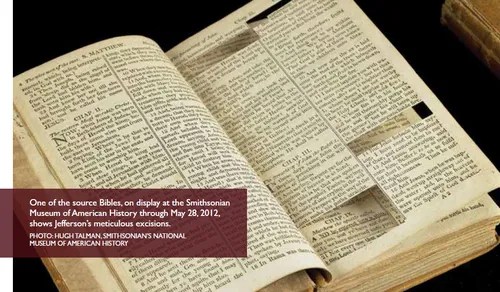
JEFFERSON’S BIBLE

It is said that Thomas Jefferson didn’t believe in the supernatural, and so one day he took a penknife and cut out everything in his Bible that had to do with the miraculous. And then, just as Jehoiakim king of Judah did fourteen hundred years earlier, he tossed each successive clipping into the fireplace. It’s called the Jefferson Bible. I don’t know if this story is true or not, but I am aware of many others since who have virtually cut out large swaths of Scripture from their bibles, refusing to preach on certain subjects either because they don’t believe them or they found them inconvenient.

One of those large swaths that have downsized many of today’s Bibles is anything having to do with End Times prophecy and how it relates to the Church and the nation of Israel. Though more than two hundred verses in the New Testament and as much as one-third of the entire Bible deal with eschatology, these verses appear to have been lost to “Jefferson’s penknife.”

Why would anyone avoid preaching on prophecy and the End Times? I can only guess that some don’t want to be associated with the “doomsday, sandwich-board whackoes.” Leave it to the devil to raise up these latter-day charlatans in the first place, those date-setting, bearded, self-proclaimed oracles, resulting in the denigrating of any genuine, Scripture-based, End Times teachers. You know, those brave souls who would dare to include the books of Daniel and Revelations in their pulpits.

Another excuse I’ve heard for boycotting this subject is that preaching on prophecy is too confusing and difficult to understand. I read that as virtual-signaling that someone doesn’t want to make the effort to dig into the more complex and weightier parts of Scripture. Others, I’ve heard, don’t want to scare off or offend their congregations, but all they’re doing is cheating them out of the self-cleansing expectancy of the imminent return of Christ and the Rapture of the Church. And that we’ve been chosen to comprise the last generation of the Gentile Age, and that our future is far more glorious than anything we could hope for or imagine. Paul, a recent visitor to glory, said he heard things there that were so utterly Divine that a human tongue wasn’t worthy to utter them. Why would you not want to remind people of that kind of hope?

A second topic that avoids most sermon notes is the controversial subject of spiritual gifts. Controversial only because many of today’s preachers don’t believe in their present-day application, especially the power and vocal gifts, and so they gloss over them with nary a mention. And even many who are Spirit-filled downplay even the genuine, orderly expression of these gifts in their services for fear of appearing “too weird.” But they too are depriving their congregations, cheating them out of the full power of the Holy Spirit and the potential for individuals to express their gifts in order to build up the Body of Christ. Ever since Pentecost, the birth of the Church, every believer has been promised this power and giftings from Above, and if it wasn’t missing in action from many preacher’s teachings, they might be discovering their gifts and blessing the Church with them.

A third swath of Scripture that has gone absent without official leave is the subject of spiritual warfare. Paul warned, “We wrestle not against flesh and blood, but against the rulers, against the authorities, against the cosmic powers over this present darkness, against the spiritual forces of Evil in the heavenly places.” I’m not talking about chasing demons or mapping out your city, but how are believers to wrestle against cosmic forces of Evil if they aren’t even aware that they exist? Paul further wrote, “The weapons of our warfare are not of the flesh but have divine power to destroy strongholds.” Strongholds? What’s he talking about? “Resist the devil and he will flee.” The who?

This power and authority over the Evil one was given to us at the Great Commission. Without it, we’d have to call it the “Limited Commission.” One of our enemy’s greatest feats has been to get believers to ignore or deny that the devil even exists. And his strategy must be working, as a recent Barna survey revealed that almost 60% of self-proclaimed Christians don’t believe in a literal devil. And Google agrees. Is it any wonder that so many of God’s people feel defeated in their walks when they’ve been unknowingly thrust into a spiritual war zone completely unequipped?

These modern-day Jeffersonian Bibles have resulted in effectively shrinking God’s Word to about half its original size. It’s not that I believe these pastors don’t teach on other critical areas of Scripture, like salvation, repentance, forgiveness, thanksgiving, and such things, because I’ve heard them. But if I was Screwtape, I especially would not want them to teach on the power of Pentecost. I would want that subject buried somewhere in the distant, forgotten past. Bad enough these Christians come to church and go about doing some good works here and there without them shifting into another gear with the supernatural to aid them. And would the devil want believers to be focused on the return of Christ? No, he would want them sleepy, complacent, and with their lamps lacking oil. And why would that “old serpent” want believers to be enlightened about his nefarious activities in the world? He’s not called the “Prince of Darkness” for nothing. Better to let them keep their harmless, red-clad, cartoonish, Hollywood version rather than the real thing.

It’s not that believers can’t dig into these subjects on their own, but most don’t make the effort and just depend on their preachers to tell them what to believe. In Paul’s farewell speech to the Ephesian elders in Acts 20, he said in part, “Nor did I shrink from declaring to you the whole counsel of God.” Paul, rather than shrinking God’s Word, believed we should teach the entire revelation of Scripture without omitting or adding to it. Anything less would be a sin and a great disservice to the people God has entrusted to us.

THOSE LAST FOUR WORDS

I’m not trying to embarrass this guy, or maybe I am, but there’s a certain pastor named Bill from Amarillo, Texas who gives a one-minute “Let’s Go Deeper” segment on a Christian radio station, so you may have heard of him. Now that I’ve outed him, I’d like to give him his due.

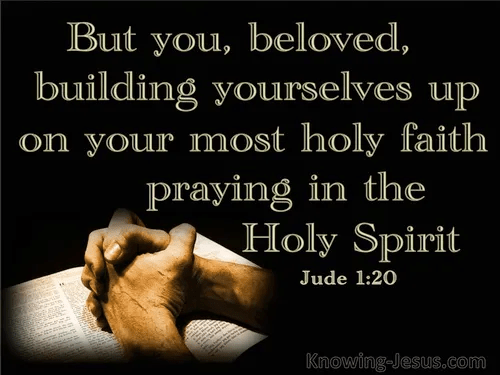
Pastor Bill said he was preaching his way through the book of Jude and then quoted verse 20, which reads in part, “But you, beloved, building yourselves up in your most holy faith…” If you’re wondering why I left off the last five words of that Scripture, it was purposeful, because in explaining this text, Pastor Bill also left it off.

And there lies the problem. Leaving off those last five words changes the whole meaning of Jude’s intent. I’m not living in Bill’s head so I don’t know if he just innocently misinterpreted this Scripture or if it’s intentional and he’s trying to avoid a subject he’s uncomfortable with, but when you go out of your way to eliminate part of the written Word, I suspect the latter. Now that we’ve exposed his crime, let’s look at his takeaway from this aborted text. Bill asks the question. “How do we build ourselves up in our most holy faith?” Great question. The answer would have been obvious to him if he hadn’t cut off those last five words.

But he did. And then instead, Bill takes us on a detour and redirects us to Acts 20:32, which has Paul speaking to the Ephesian elders: “And now I commend you to God and to the Word of his grace, which is able to build you up.” Then, Bill does a virtual cut and paste from Acts 20 and attaches it to Jude 20 and creates his own version of Jude’s words. According to Bill’s new translation, we are built up in Christ by the “words of his grace.”

True. But we are also built up in corporate worship and by Christian fellowship and by someone close to us being converted to Christ and by a whole host of other things. Though we are certainly built up by the “words of his grace,” Jude was speaking specifically about something different. In case you haven’t already read those last five words, I’ll let Jude give them to you now. They are, “PRAYING IN THE HOLY SPIRIT.” So, the completed verse would read, “But you, beloved, building yourselves up in your most holy faith, praying in the Holy Spirit.” Elsewhere, Paul defines “praying in the Holy Spirit” as “praying in tongues.”

And so you see why this is such a big deal. It’s not like if you don’t like the plain interpretation of something, you can just translate it differently to suit your own taste just because you’ve got the pulpit. The JW’s know all about that. And then there’s that thing about not adding or subtracting from the Word of God. I’m pretty sure that would include cutting and pasting parts of it.

After the Resurrection and just before he ascended back to heaven, Jesus gave his final instructions to the disciples: First, the Bible says, “He breathed on them and said, ‘Receive the Holy Spirit.’” At this point, they were spiritually reborn and received the indwelling Spirit that comes with salvation. Then, a little later, he instructed them further: “And behold, I am sending the promise of the Father upon you. But stay in the city until you are clothed with power from on high.” So, in addition to receiving the indwelling Spirit upon salvation, he said that forty days later at Pentecost they would receive the baptism of the Holy Spirit and be “clothed with power from on high.”

This is just the plane, straightforward reading of the text. You don’t have to be a Bible geek or have a Greek and Hebrew lexicon to understand it. You don’t need the fifty-six-volume Bible Illustrator commentary to arrive at the proper interpretation. And you don’t need a master’s degree in theology to understand this, though that in itself these days might be a hindrance. And you certainly don’t want to fuse two unrelated texts together in order to pretend they mean something else, as Pastor Bill appears to have done.

And Bill’s not alone. Countless Bible teachers avoid these biblical truths like black mold on a toilet seat, One such teacher said, “Paul’s letter to the Corinthians was to get them off the kick of speaking in tongues.” I guess then Paul would have to kick the habit also, since he said, “I speak in tongues more than you all.” Another said, “The gift of tongues is not given for personal enrichment.” Again, we’d have to believe that Paul spoke a lot in tongues but was never enriched by the experience. And my favorite: “Jesus didn’t speak in tongues.” I even once had a pastor mock the use of tongues from the pulpit while looking angrily down at me. Yikes, with everyone clapping and praising God in this mega church, how did he know it was me? And this was in a self-proclaimed Pentecostal church. Go figure.

“The devil comes to steal, kill, and destroy.” To me, one of Satan’s most successful and devastating thefts has been his robbing the Church of the baptism of the Holy Spirit. The result of this theft is that without this original juice, most of Christendom has become stuffed up with religiosity and programs substituting for the power of God, and some are even denying the faith altogether. This theft has robbed the Church of the main thing that makes it a Church, the full, energizing power of the Holy Spirit to overcome in these perilous, waning days of the Laodicean Church Age.

As the song goes, “These are the days that we’ve been waiting for, all of our lives.” These are the days the prophets eagerly looked forward to. The blueprint we were given at Pentecost wasn’t meant to just strap us into the starting blocks and then have us quit the race after a quick sprint. Are we to believe that God didn’t want us to have all his spiritual weapons in our arsenal and the fullness of his power to make it to the finish line?

THE DUAL PURPOSE OF TONGUES

What Is The Baptism Of The Holy Spirit

In this final blog on the baptism of the Holy Spirit, I want to explain the two different types of speaking in tongues. Even among some bona fide Pentecostals there is some confusion on this. The first type is for prophecy, tongues that need to be interpreted. If there is no interpretation, the speaker should be silent or pray that he could interpret the message himself. The second is for a personal prayer language, not to be used in the church assembly but should only be exercised in one’s private prayer closet.

Paul differentiated between these two functions in his first letter to the Corinthians. It needs to be said that the church at Corinth was the most fleshly, carnal of all first-century churches, even more carnal than your average evangelical church in America today. In one instance, a young man was sleeping with his stepmother. Even the Methodists don’t allow for that. Though this violated the Old Testament and Roman laws of the day, apparently no one thought it a big deal. In fact, they were rather proud of it, perhaps a chance to prove their wokeness. And when Paul chastised them for their depravity, they thought he was a little over the top about it. And when it came to the Lord’s Table, instead of using it to remember Christ’s death and resurrection, some were celebrating the wine far more than others and treated the sacrament with all the reverence of a bachelor party at Buffalo Wild Wings.

These fleshly, carnal Corinthians were also abusing the gift of tongues, disrupting the church services by randomly blabbering away, possibly after having guzzled too much of that Communion wine. They are not unlike the present-day hypercharismatics and their “out-of-control” manifestations, that serve to violate Paul’s command to “let all things be done decently and in order.” So Paul admonished the tongue-talkers for their foolishness and told them to keep quiet in the church unless there was someone there who could interpret them for the benefit of all.

So, the first function of tongues is prophetic and requires an interpreter. The second function is that of a prayer language. Paul contrasted these two uses when he wrote, “The one who prays in a tongue edifies himself, but the one who prophesies builds up the church.” In writing of his personal prayer life, Paul wrote, “If I pray in a tongue, my spirit prays but my mind is unfruitful … so, I will pray in the Spirit and also with my understanding.” This kind of prayer tongues are for those times when mere words are inadequate to express our deepest needs and desires. Paul explains this in Romans 8: “Likewise the Spirit helps us in our weakness. For we do not know what to pray for as we ought, but the Spirit itself intercedes for us with groanings too deep for words,,, because the Spirit intercedes for the saints according to the will of God.”

Praying in tongues is also a powerful means of personal edification. As Jude put it, “… but you, beloved, building yourselves up in your most holy faith, praying in the Holy Spirit.” This is not a selfish exercise, but a gift God wants every believer to have so they can have more of his presence and for additional power to carry out the work he has given us to do. It’s like salvation on espresso.

Those who want to criticize the gift of tongues like to emphasize the texts that say, “The one who prophesies is greater than the one who speaks in tongues.” And that speaking in tongues is “the least of the gifts,” as if this gift had little worth at all. But is any gift from God not of supreme value? Paul left no doubt about his personal dependence on tongues when he wrote, “I speak in tongues more than you all.” I would encourage those who have built a wall of defense around tongues through their own various interpretations to lower their guard and ask God to reveal this gift to them.

Paul is writing this not to lessen the importance of this personal prayer language, but to amplify the importance of building up the whole church, which is the primary aim of all spiritual gifts. He said, “Each is given the manifestation of the Spirit for the common good.” But there is also an important place for the God-given praise and prayer language so that Spirit-filled believers can “build themselves up in their most holy faith, praying in the Holy Spirit.”

I hope this helps you to better understand this complex subject. It’s not actually that complex—it’s quite straightforward. Unfortunately, those who want to relegate all Spiritual gifts to the distant past have muddied the waters for those who have followed their teachings.

THE INDWELLING HOLY SPIRIT AND THE FIRE OF PENTECOST

In this third blog on the subject of spiritual gifts, I want to explain the difference between the indwelling Spirit of Christ, who comes to reside in every believer immediately upon salvation, and the baptism of the Holy Spirit, a separate experience that is promised to every believer who earnestly seeks it. In studying this out again, I have had to relearn some things I’d forgotten and unlearn some others I thought I knew, and so this is the result.

The Bible teaches us that whenever a person is born again they receive the Spirit of Christ, who immediately resides within them. Paul wrote to the Ephesians that they were “sealed with the promised Holy Spirit, who is the guarantee of our inheritance until we acquire possession of it.” This relationship has often been illustrated as God giving us an engagement ring, the Holy Spirit, assuring us that one day we will acquire our full possession and be seated with him at the Marriage Supper of the Lamb.

The disciples became the first converts of the New Testament when Jesus, after rising from the dead, “breathed on them and said, ‘Receive the Holy Spirit.’” This word breathed was also used when God breathed into Adam’s nostrils “the breath of life.” It is used similarly when Ezekiel spoke to the dry bones: “Behold, I will cause breath to enter you and you shall live.” Paul in addressing this indwelling Spirit wrote. “You, however, are not in the flesh but in the Spirit, if in fact the Spirit of God dwells in you.” And to the Romans, he wrote, “anyone who does not have the Spirit of Christ does not belong to him.”

This is the indwelling Spirit of salvation. But the baptism of the Holy Spirit is a separate experience. Unlike the Spirit of Christ that dwells in every true believer, this baptism is not necessary for salvation, but it greatly empowers it, and God intends for every believer to have it, as promised by John the Baptist. (Luke 3:16). In March of 1977, a few weeks after I had a Divine Encounter with God along a desert road in Arizona, I received this “baptism of the Holy Spirit is a separate experience” It involved three men, a small room, and a lot of shouting. The only requirement to receiving the baptism of the Holy Spirit, besides being born again, is to have a humble and hungry heart for more of God.

Before Jesus ascended back to heaven, he promised this “second blessing” to his disciples. He told them it was expedient that he leave so he could send them the Holy Spirit. They had recently been converted and received the indwelling Spirit of God, and now on the Day of Pentecost, a hundred and twenty obediently gathered for a prayer meeting in the Upper Room. There, they received “the promise of the Father” and were “clothed with power from on high.”

In Acts 19, Paul asked some Ephesian believers if they had received the Holy Spirit when they believed. One interpretation of this text is that when Paul discovered these Ephesian believers had only been baptized in John’s baptism, the same baptism that the early apostles received, Paul baptized them in the New Testament baptism of repentance and then proceeded to pray for them to receive the baptism in the Holy Spirit whereby they spoke in tongues.

The other possible explanation of this text is that these Ephesian believers were genuinely saved in the baptism of John. Thus, they already had the indwelling Spirit within them and would already possess the Spirit of salvation. But they hadn’t yet heard about the baptism in the Holy Spirit, the “second blessing,” so Paul laid hands on them to receive the baptism of the Holy Spirit.

In this latter interpretation, Paul wouldn’t have asked this question, “Have you received the Holy Spirit since you believed,” if salvation and the baptism of the Holy Spirit was the same. They responded, “No, we have not even heard that there is a Holy Spirit.” When Paul laid hands on them, “the Holy Spirit came on them, and they began speaking in tongues.” In fact, every time someone got filled with the Holy Spirit in the book of Acts, they spoke in tongues, but that’s for another blog. I could build a solid case for either of these interpretations, but I’ll let you decide for yourself.

I’ve heard the accusation that Pentecostal-type believers consider themselves superior to other believers. On the surface, that would seem plausible; wouldn’t it be inevitable that having more of the Spirit would make one a greater Christian? But that logic doesn’t hold in real life. In truth, many of the greatest saints in all history didn’t claim this “second blessing.” And many who do claim it, make very little use of it and oftentimes have less of the fruits of the Spirit than other believers. And most Pentecostal churches today have no more “Spirit-filled” activities than your mainline Methodists. And some who do claim Pentecost, open themselves to another spirit that incites them into flopping, flagging, and making laughing fools of themselves, and fools of the Holy Spirit. And no one can act as wacky and weird as an unhinged Pentecostal. Paul said, “not to use your freedom as an excuse for the flesh.”

I hope I have clearly shown the difference between the Spirit of Christ that comes to dwell in every believer upon salvation and the baptism of the Holy Spirit. My sole purpose in pointing this out is to do the work that many pastors and Bible teachers have for various reasons failed to do. It is my hope that every believer would have access to the fire of Pentecost that God intended for all of his saints, especially in these perilous times as we await his soon coming return.

RELIGHTING THE FIRES OF PENTECOST

Paul said in his first letter to the Corinthian church, “Now concerning spiritual gifts, brothers, I do not want you to be uninformed.” One of Paul’s greatest fears, besides his fear that his fellow Jews would fail to come to Christ, is that the power of the spiritual gifts, especially the sign gifts, would eventually be lost to the Church. But then, less than three hundred years after Paul’s letter, most churches have become just that.

The other day I did an internet search for churches in my city that claim to be “Spirit-filled” or “Full Gospel.” Unfortunately, over time, these terms have been so compromised that today they can mean anything from being jacked up on caffeine in the church bistro, to having a sugar rush from the glazed donuts, to having an ultra-animated church greeting committee, or even having an electric guitar in the worship service.

According to my research, the Unitarians and the Presbyterians are considered “Spirit-filled.” Regrettably, this term has lost most of its original punch, unless these groups have suddenly had an Azuza Street-type revival that I wasn’t aware of. Out of over one hundred churches in my city, there were only two that actually believed in the “baptism of the Holy Spirit and fire” that Jesus promised to every believer in Luke 3:16. This is exactly what Paul feared for his Corinthian believers.

In his book, Charismatic Gifts in the Early Church, Ronald N. Kydd exposes one of the most common myths about why some believe the sign gifts have ceased. He writes that as the Christian community in the 3rd Century grew in size, wealth, and social acceptance, the gifts of the Spirit just quietly slipped away. This started in 313 A.D. with the passing of the Edict of Milan, an agreement between Emperor Constantine of the Western Roman Empire and Emperor Licinius of the Eastern Roman Empire, resulting in them changing their policy towards Christians, essentially ending persecution and giving the Church legal status. If the fires of Pentecost had not been extinguished in the 3rd century, we could have likely avoided the 1000 years known as the “Dark Ages.”

In other words, as the believers were no longer enduring the fires of persecution, their spiritual temperatures cooled, and their hearts and minds shut down to their need for the supernatural power of the Holy Spirit. So, it wasn’t that the gifts ceased, as many have claimed, limiting them to the Apostolic Age only, but because the Church at large didn’t think they needed them anymore.

So, the sign gifts didn’t just fade away or cease to exist, but they were simply written off by most of the Church world because they had grown self-sufficient, and so like many churches still today, they reflect another one of Paul’s letters when he said they would have “an appearance of godliness, but they would deny its power.”

My hope is that these sign gifts of the Spirit be returned to the Church, where Paul intended them to be. In this present-day Laodicean Church Age, any talk of having a last day’s revival is improbable. But any talk about having such a revival without relighting the fires of Pentecost is absurd.

In a world that is experiencing a foretaste of the Apocalypse, maintaining one’s personal walk with Christ is a unique challenge. Witnessing firsthand the absolute End Time’s Evil, long-hidden but now rising out of the shadows, we need to breathe in the power of Pentecost as never before.

THE DEATH OF PENTECOST

Paul said in 1 Corinthians 12:1, “Now concerning spiritual gifts, brothers, I do not want you to be uninformed.” Unfortunately, today, that is what most teachers and believers are, misinformed about spiritual gifts, in particular, the sign gifts. In this blog, I’m only going to address the baptism in the Holy Spirit with the outward evidence of speaking in tongues, or what I’ll refer to here as “the power of Pentecost.” And why is the subject of the power of Pentecost so critical, I mean, it’s not a matter of one’s salvation, right?

Or is it? And no, I do not believe that baptism in the Holy Spirit with the evidence of speaking in tongues is necessary for salvation. In a future blog, I will deal with the indwelling Spirit that comes into every believer upon salvation, but for now, I am speaking of what’s been called “the second blessing.”

How many believers today are weak in their faith because the power of Pentecost has been denied them? Jesus promised this power to every believer when He said, “John baptized with water, but you will be baptized with the Holy Spirit.” I believe this is Satan’s most successful attack against the church, convincing many otherwise brilliant theologians and pastors that this power is no longer available for the New Testament church. The vast majority of pastors ignore it altogether, relegating it to a distant past Age, leaving their people uninformed or misinformed. In a world that wants to put tampon dispensers in schoolboys’ bathrooms, and where young people are being surgically mutilated in the name of gender fluidity, one’s spiritual survival and sanity are clearly under attack. And how many struggling souls have been seduced back into the cultural sludge of this generation, into the flesh and perdition of this world for lack of the power of God to help them overcome?

Another way Pentecost has been killed is by what I refer to as the “hyper-charismatics,” commonly demonstrated by middle-aged, uncovered, attention-seeking women, swooning and shaking and laughing and crying “in the spirit” until they’re so overcome they go down “slain in the spirit.” Anytime a spirit renders a person “out-of-control,” they’re not under the power of the Holy Spirit; they’re being controlled by a demon spirit. I like how one well-known evangelist dealt with such manifestations, he instructed his ushers to take the person aside and cast the demon out of them. This false movement has done more to demonize the word “Pentecostalism” than any other single attack from hell.

The most common misinformation concerning the present-day gifts of the Spirit is that they passed away when the disciples passed on, by the end of the 1st century, and so they are no longer available or needed in our present world. These people are called “cessationists,” believing the power of Pentecost is no longer needed in our present Age. If this were true, then we’d have to believe that Christ, knowing that these Last Days would be the most wicked times since He walked the earth, didn’t think we would need the spiritual gifts to make it through to the End. Is this present-day Laodicean church Age so arrogant that they actually believe we no longer need this spiritual power? That would explain why most churches fulfill a Last Day’s prophecy that says many will “have a form of godliness but deny the power thereof.” Is it any wonder that Jesus doubted that when He returned, would He even “find faith on the earth?” I know that seems harsh, but I have a passion to see the power of God restored in this present Age.

The basis for the cessationist’s denial of present-day Pentecost comes from a lame interpretation of several verses in 1 Corinthians 13. They read, “As for prophecies, they will pass away; as for tongues, they will cease; as for knowledge, it will pass away. When I was a child, I spoke like a child, I thought like a child, I reasoned like a child. When I became a man, I gave up childish ways. For now we see in a mirror dimly, but then face to face. Now I know in part; then I shall know fully, even as I am fully known.”

Cessationists believe that the spiritual gifts passed away when we received the completed Bible, and thus, we no longer see dimly through a mirror since now we have the Word of God. And that before this, we spoke and understood in childish ways, but now that we have the Word, we no longer know “in part” but we now know “fully.” I wish that were true, but when I read the Word, unfortunately, like all others, I still only know “in part,” though I hope to be learning more and more as I continue reading and studying and growing and changing from glory to glory. But I don’t know “fully” yet, and neither does anyone else.

This interpretation, especially falls short when Paul says that we will have this fullness when we see it “face to face.” Face to face with what, with whom? The Bible? That seems like a strange way to talk about the Bible. My Bible doesn’t have a face, just a cover and lots of pages, but no face. This is obviously not talking about receiving the completed Word, but the Word of God Himself and when we see Jesus “face to face.” And when do we see him “face to face” but when we get to heaven? Paul is clearly saying the obvious, that we won’t need spiritual gifts after we get to heaven, because only there we will have the full revelation of Jesus Christ.

Finding a church today that teaches and demonstrates the power of Pentecost, and one that teaches the whole counsel of God, including the End Times, is almost impossible. I know it took my wife and I years. As we clearly see the signs of the Times pointing to the soon return of Christ for His Church: the sudden resurgence of worldwide antisemitism and the hatred of the nations of Ezekiel 38 and their “river to the sea” vitriol for Israel, and the rise of a one world economic, religious, and political system, controlled by the likes of Klaus Schwab and Bill Gates, setting the stage for the soon appearing of the antichrist, we can no longer afford to be misinformed about this power Christ has given to the Church in Acts 1:8.

Paul also lived in extremely perilous times, with heavy persecution and believing in the soon return of Christ. He said, referring to his prayer closet, “I thank God that I speak in tongues more than all of you … What am I to do? I will pray with my spirit, but I will pray with my mind also; I will sing praise with my spirit, but I will sing with my mind also.” More than ever, we need the power of Pentecost not only to survive but to be all God wants us to be in these End Times. As Jude said, “But you, beloved, building yourselves up in your most holy faith and praying in the Holy Spirit.”